
Self-drilling and self-tapping are often used as if they mean the same thing, but they describe different functions.
SELF-DRILLING SCREWS
A self-drilling screw has a drill-like point designed to create its own pilot hole in suitable material and then form or engage the mating thread as installation continues. This can reduce a separate drilling operation in sheet-metal and light structural applications when the screw point is correctly matched to the material and total drilling thickness.
SELF-TAPPING SCREWS
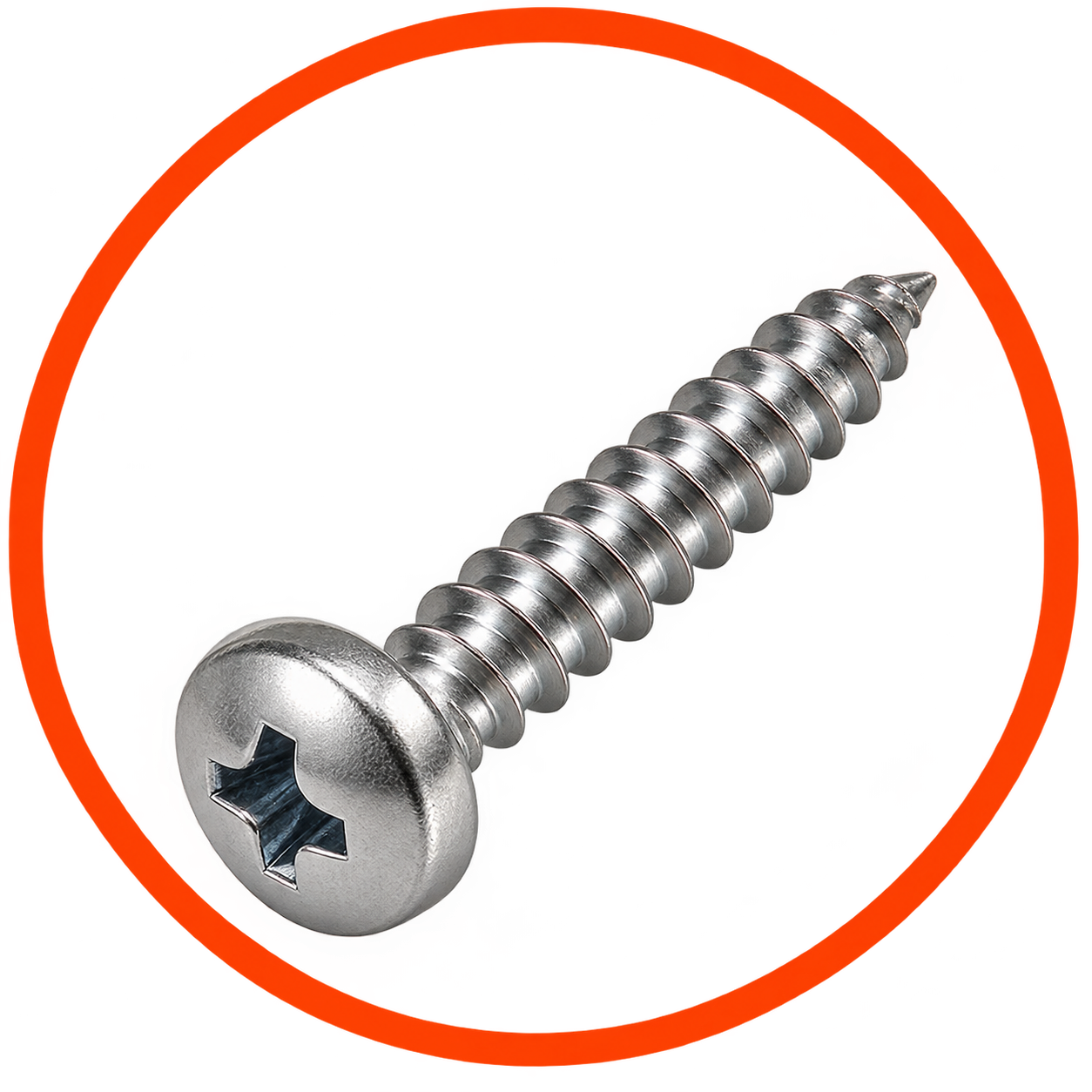
A self-tapping screw creates or forms its mating thread as it is driven. Depending on the screw design and the material, it may require a correctly sized pre-drilled or punched pilot hole. Some designs cut material, while others form or displace it.
WHY POINT SELECTION MATTERS
A self-drilling point has a finite drilling capacity. If the material stack is too thick for the point, the screw may overheat, fail to drill or damage the threads before they engage. If the material is too thin or soft for the selected thread form, the joint can strip before adequate clamp load is reached.
DRIVER SPEED AND PRESSURE
Installation speed, tool alignment and axial pressure affect drilling performance. Excessive speed can generate heat, while poor alignment can enlarge the hole or damage the head recess. Use the screw and tool manufacturer guidance for the specific product.
COATING AND ENVIRONMENT
For roofing, exterior cladding and wet environments, corrosion resistance must be considered for the screw, washer and sealing system. A plated carbon-steel screw that works indoors may be unsuitable in a coastal or chemically aggressive location.
WHAT TO SPECIFY
Record screw diameter, length, head style, drive, thread form, point type or drilling capacity, material, coating, washer or sealing requirement and the substrate thickness range.
For structural or weather-sealed systems, select fasteners approved for the complete assembly rather than substituting a visually similar screw.
Fastener Guides
Self-Drilling vs Self-Tapping Screws: What Is the Difference?
Know when a screw can drill its own pilot hole, when a pre-drilled hole is needed and what to check before choosing a point style.

Was this guide useful?
Help us improve the Knowledge Centre.