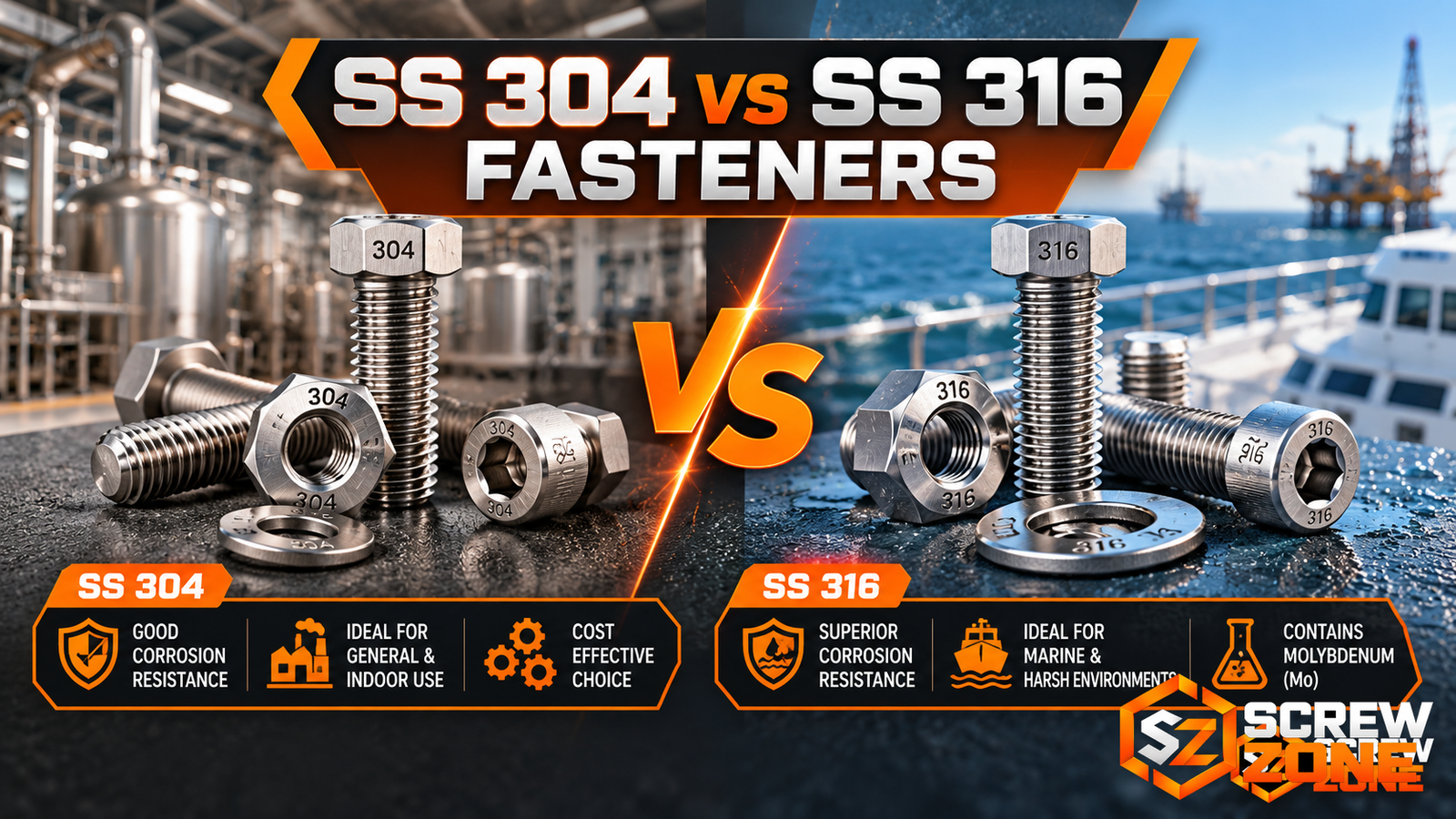



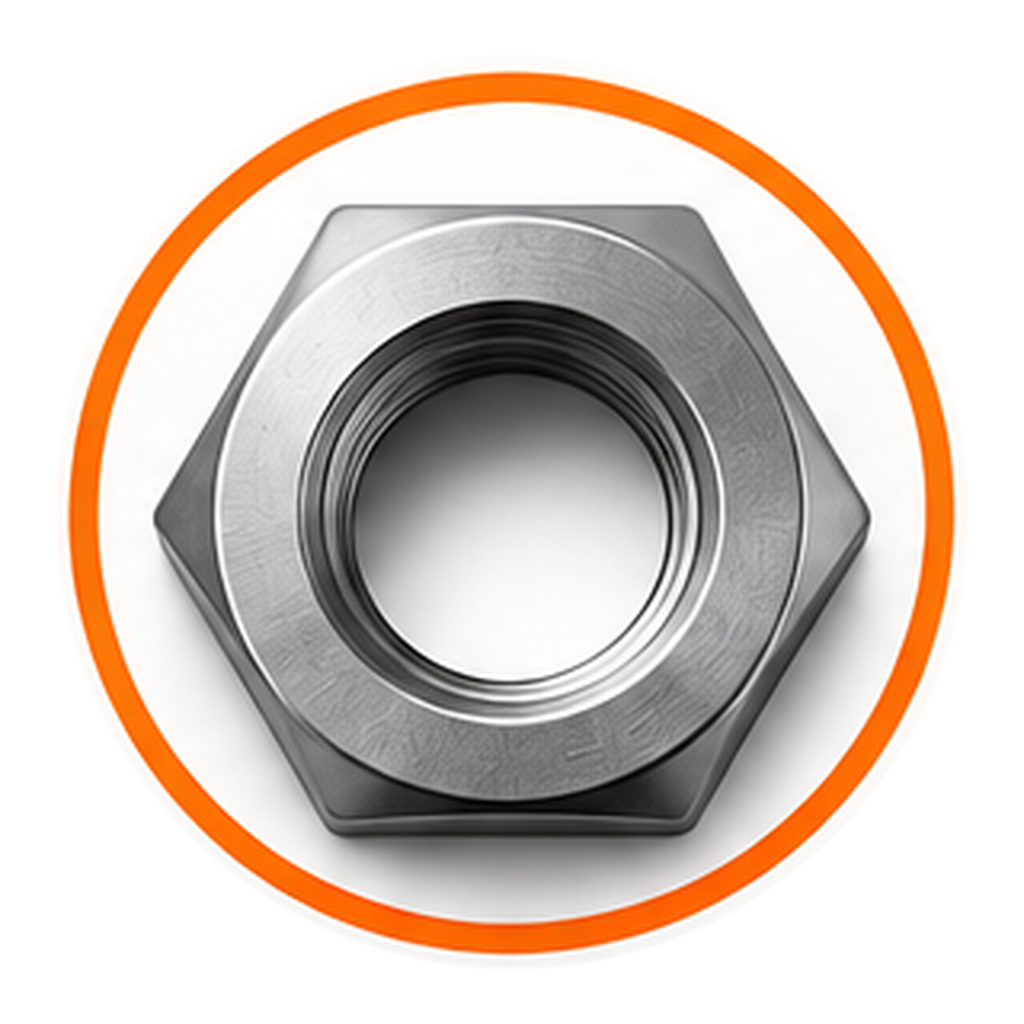
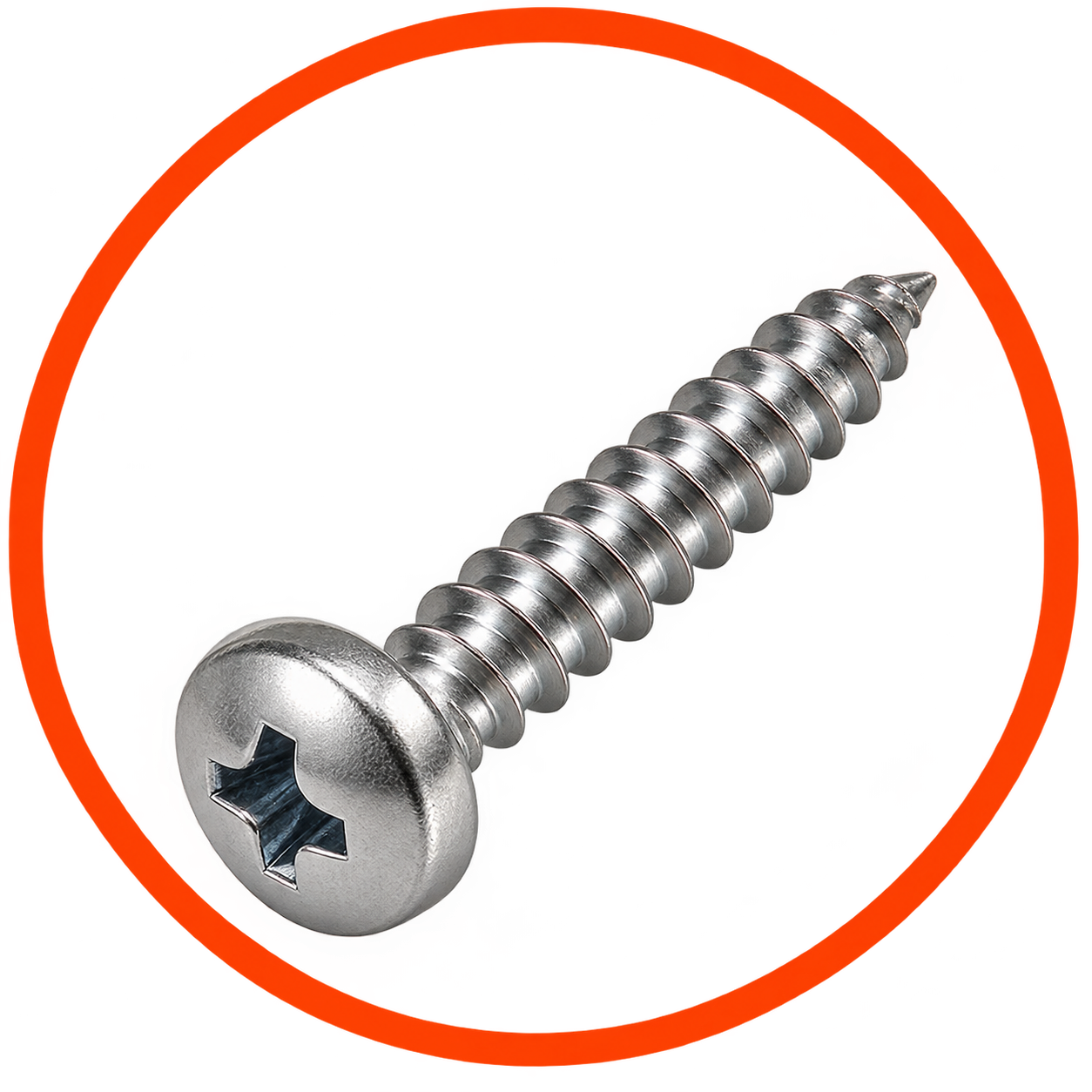
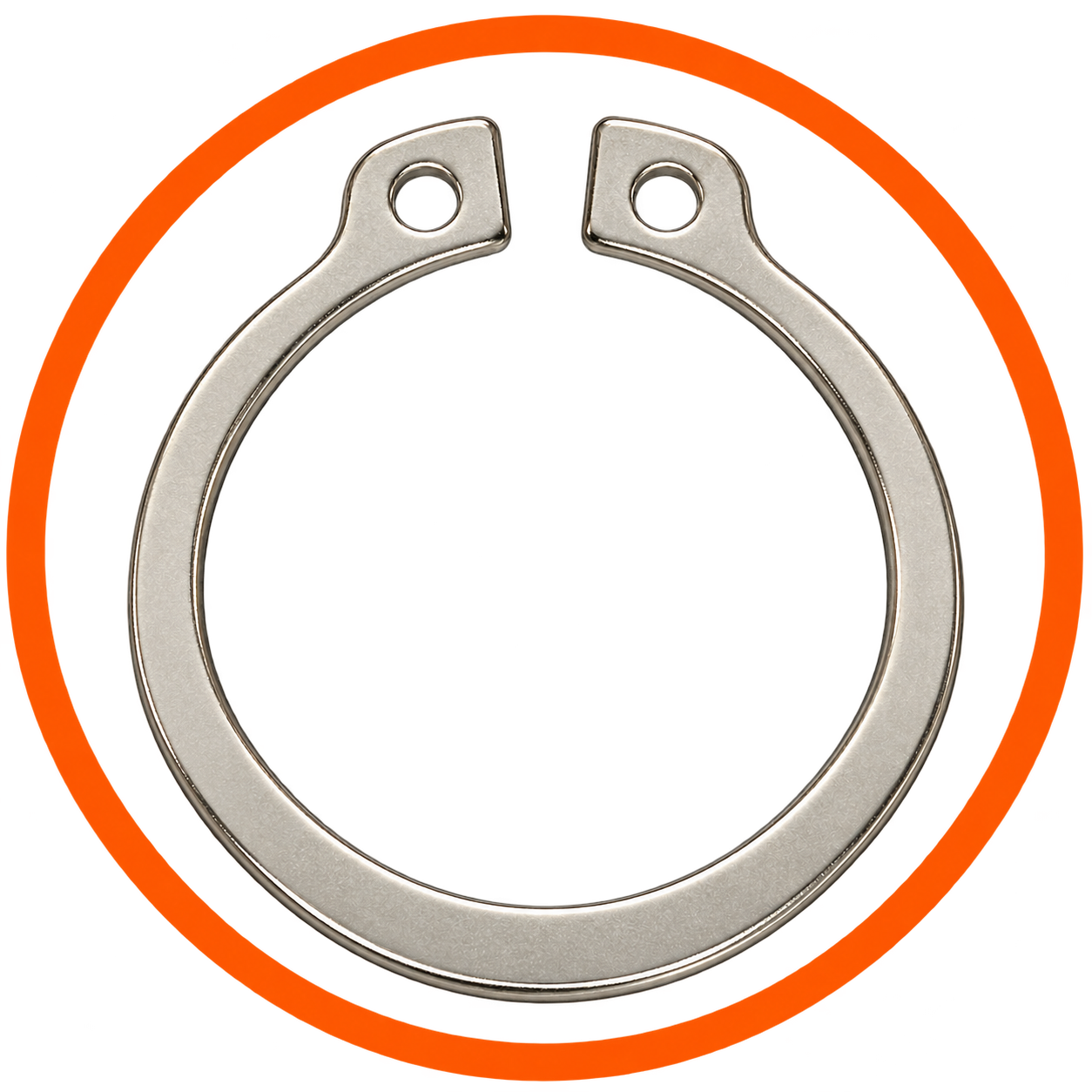
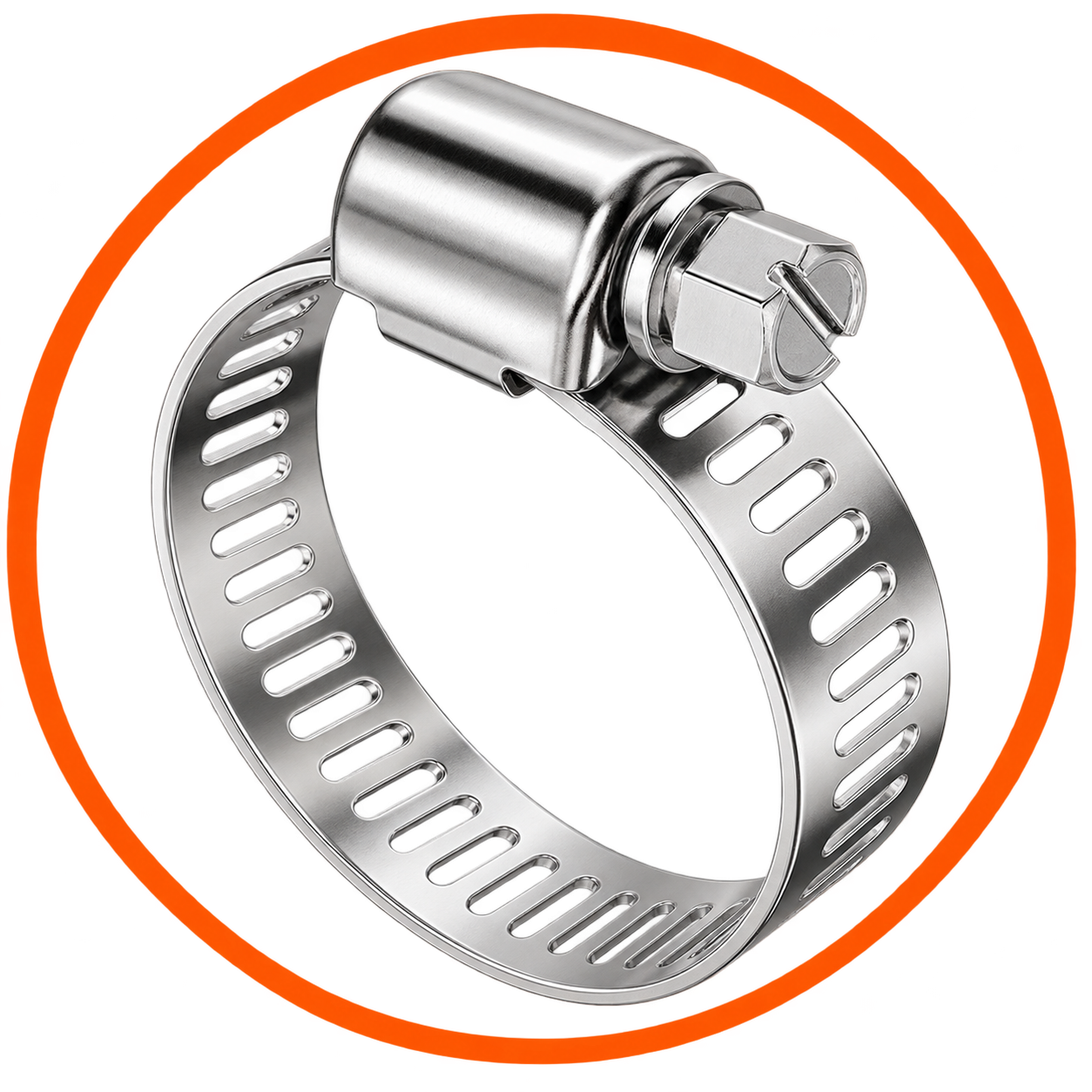


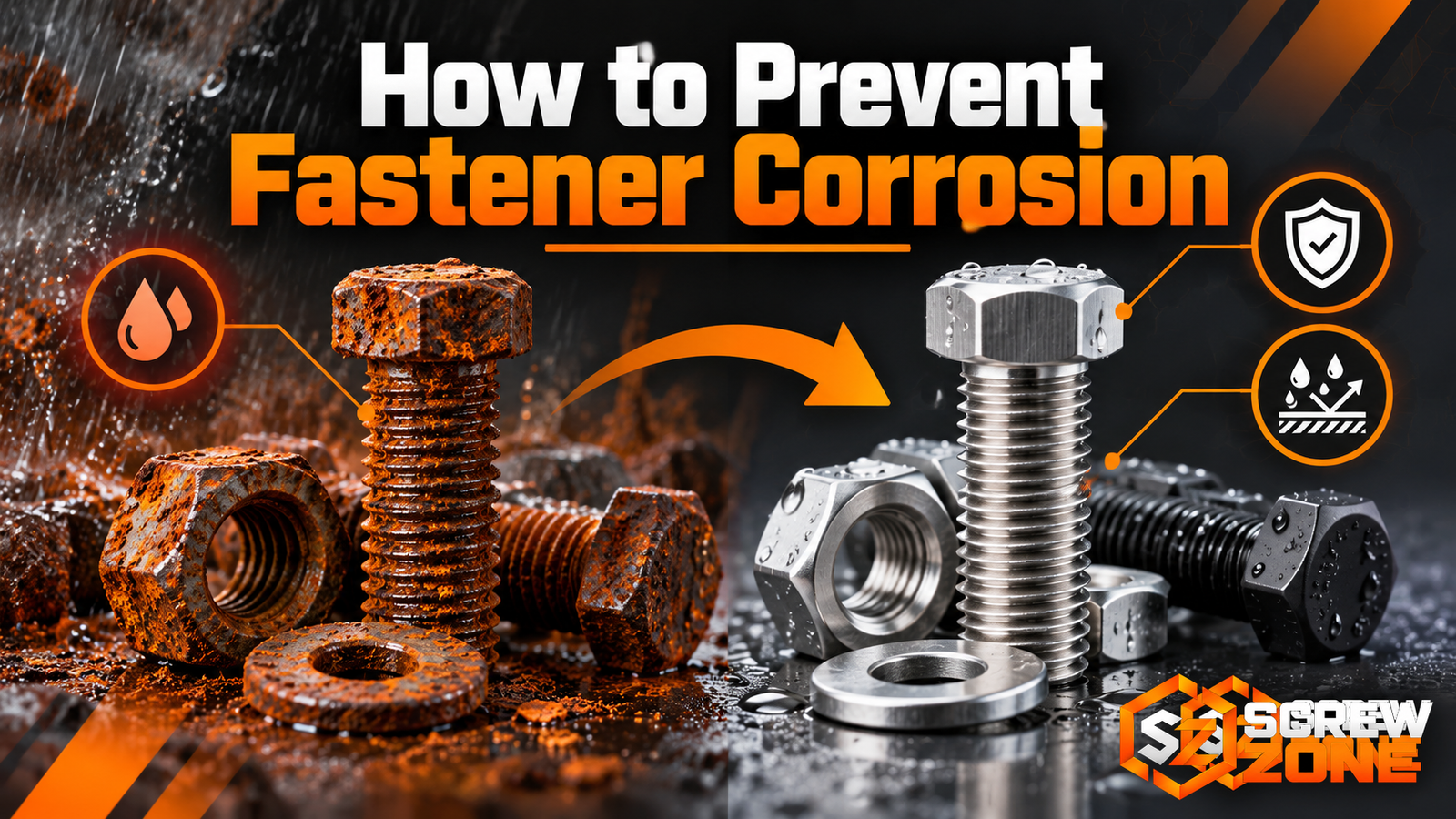
Fastener corrosion shortens service life and can weaken the complete joint. The best prevention starts with selecting a material and finish suited to the environment. Indoor dry conditions may accept zinc-plated steel, while outdoor, coastal or chemical areas often require stainless steel or specialised coatings.
Moisture traps, aggressive chemicals and contact between dissimilar metals can all accelerate corrosion. Matching the fastener material with the base material wherever possible helps reduce galvanic attack. In critical applications, use compatible washers, nuts and coatings as part of the full fastening system.
Installation practice also matters. Damaged plating, contaminated threads and poor storage can expose bare metal and start corrosion early. Keep fasteners clean, dry and sealed until use.
If the environment is severe, review corrosion resistance before ordering rather than after failure. A slightly higher initial material cost usually saves rework and downtime later.
Fastener Guides
How to Prevent Fastener Corrosion
Reduce rust and premature failure by selecting the right material, finish and installation practice.
Was this guide useful?
Help us improve the Knowledge Centre.