
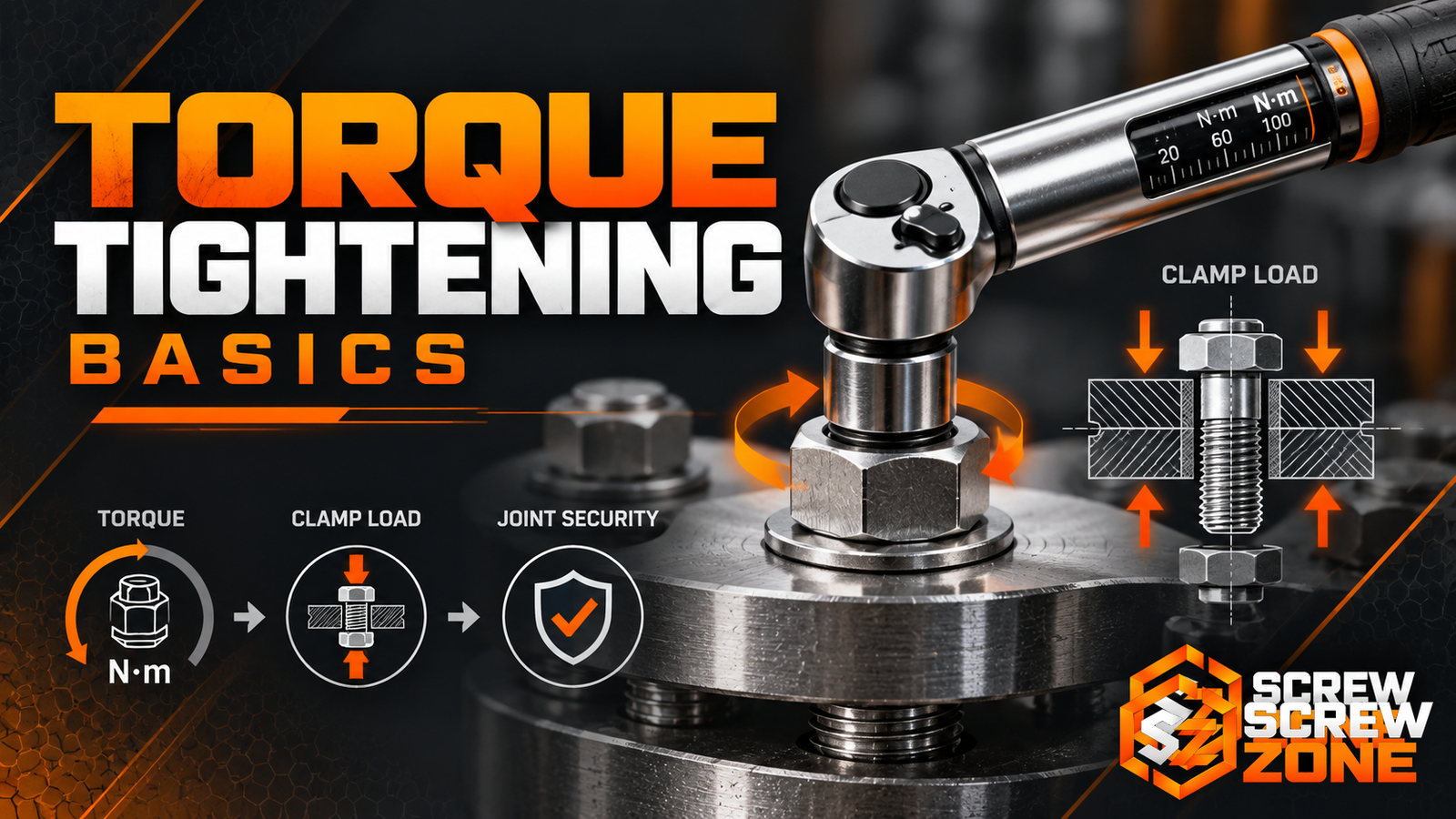
Correct tightening torque helps a fastener develop the clamp load needed to hold the joint securely. Too little torque can allow loosening, while too much can strip threads, deform the joint or break the fastener.
Torque values depend on bolt size, material grade, lubrication, coating and joint condition. A dry fastener and a lubricated fastener of the same size may require different torque to achieve the same clamp load.
Use a calibrated torque wrench and follow the recommended sequence for multi-bolt joints. In critical assemblies, engineering torque charts or application-specific instructions should always take priority.
For procurement teams, it is helpful to understand that torque performance is linked to the complete specification, not just the nominal size. Consistent material, finish and quality help achieve repeatable tightening.
Fastener Guides
Torque Tightening Basics for Fasteners
Basic torque concepts every buyer, fitter and maintenance team should understand for reliable tightening.
Was this guide useful?
Help us improve the Knowledge Centre.