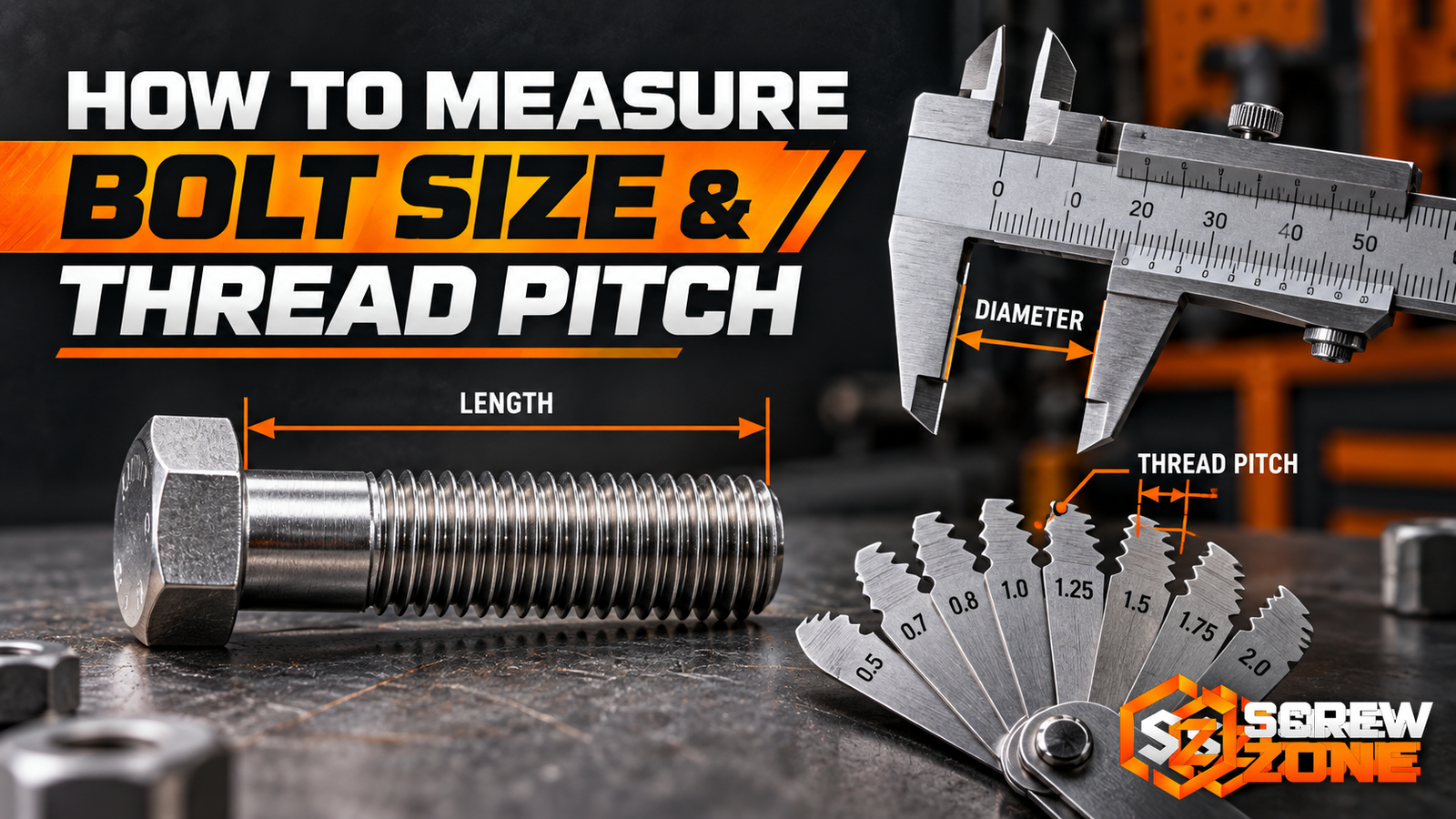


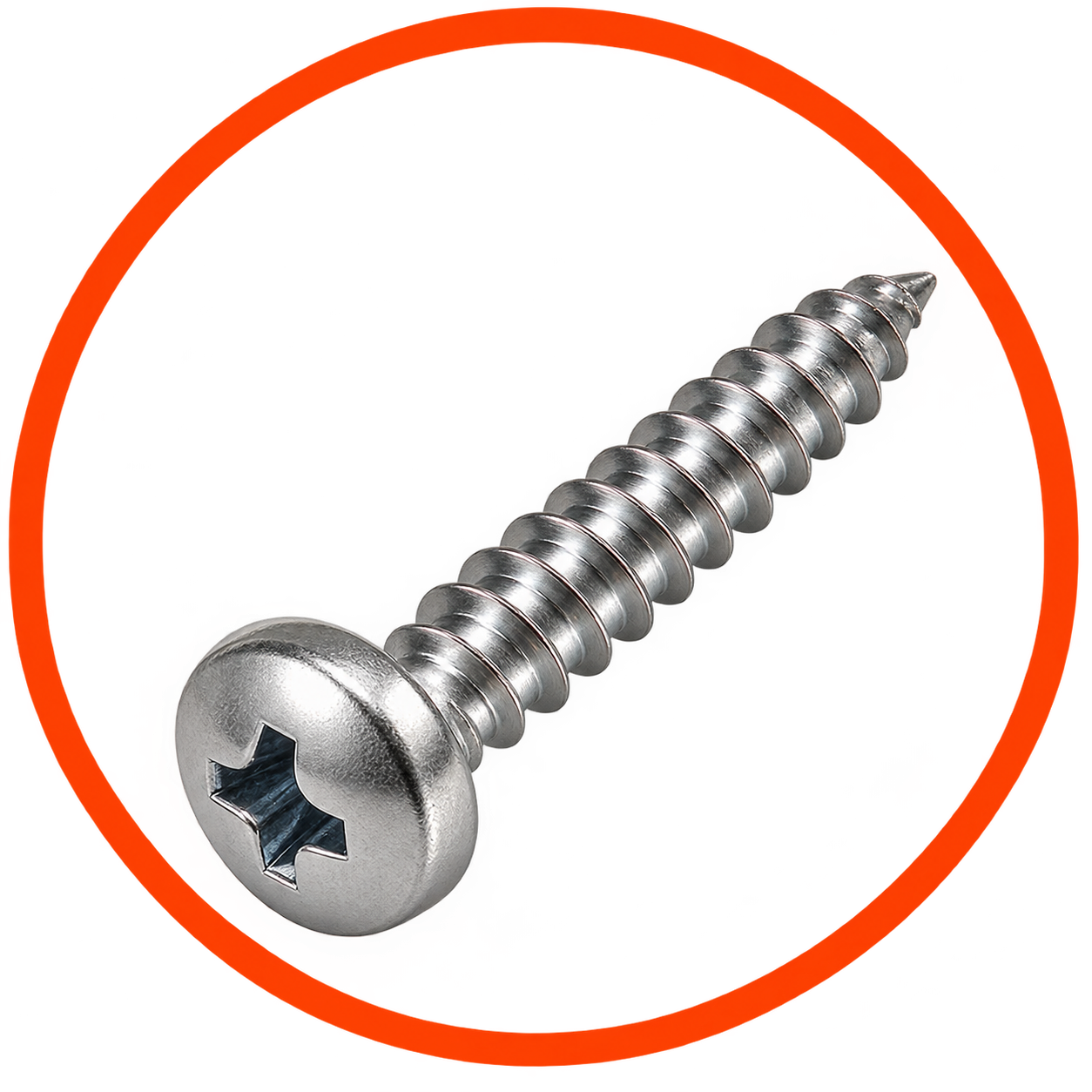
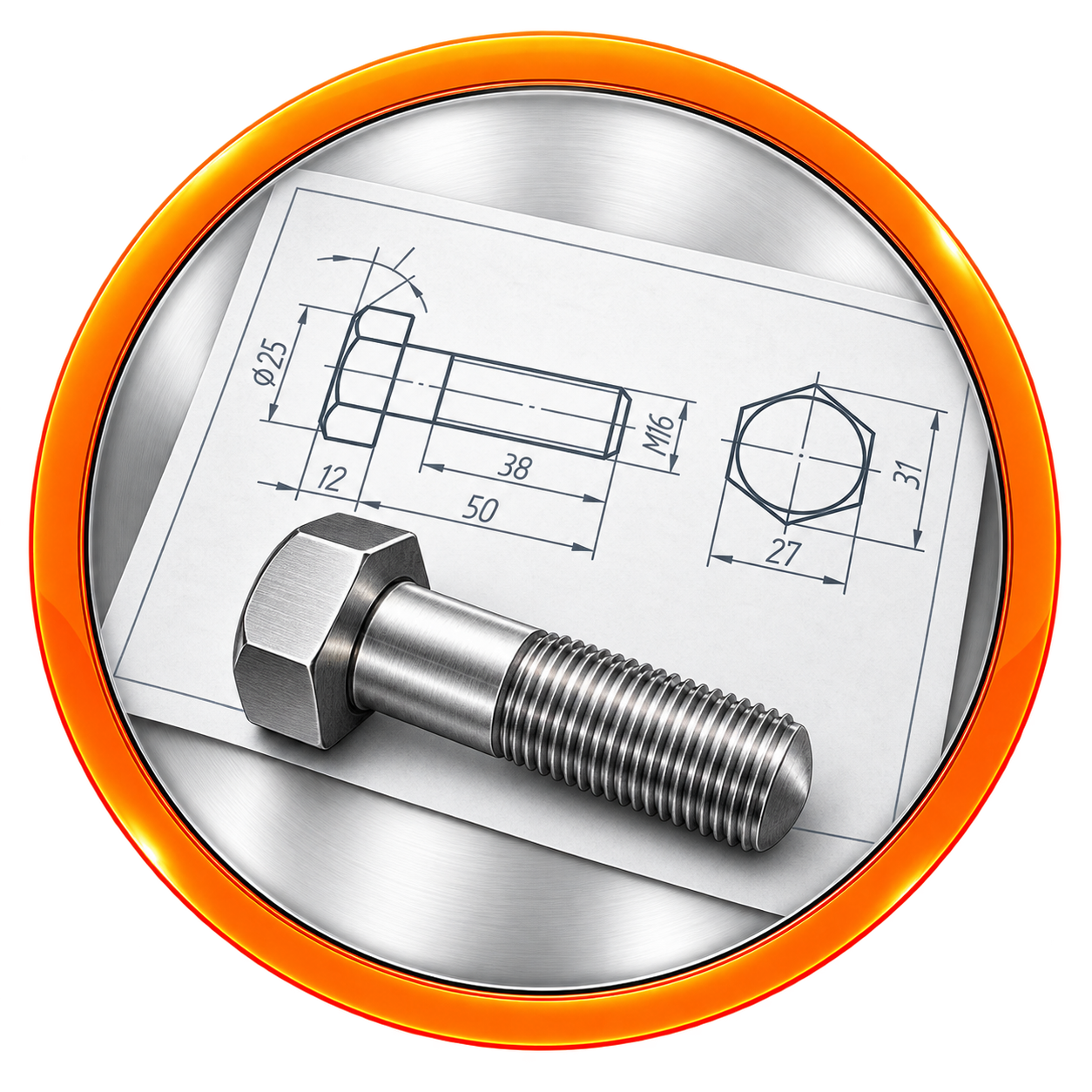
A fully threaded and a partially threaded hex fastener can share the same nominal diameter and overall length, but the location of the threads can change how the fastener fits the joint.
FULLY THREADED FASTENERS
A fully threaded fastener has thread extending for most or all of the usable shank below the head, subject to the product standard. This provides flexibility when the nut or tapped component must engage at different positions along the length.
PARTIALLY THREADED FASTENERS
A partially threaded bolt includes a smooth unthreaded section between the head and the beginning of the thread. This smooth portion is often called the shank or grip section.
WHY THE GRIP CAN MATTER
In some joints, the designer intends the smooth shank to pass through the clamped parts so a shear plane does not run through the thread. The shank can also provide better location in a close-fitting hole. Whether this is required depends on the joint design and governing standard.
THREAD ENGAGEMENT STILL HAS TO BE SUFFICIENT
A partially threaded bolt must still provide enough usable thread for the nut or tapped member after washers and the full joint thickness are considered. Choosing a bolt that is too short can reduce thread engagement, while one with an unsuitable grip length may place threads where the design expected a smooth shank.
DO NOT ASSUME DIN AND ISO PRODUCTS ARE DIMENSIONALLY IDENTICAL
Related DIN and ISO hex fastener standards may have similar appearances but can differ in details such as dimensions or thread length. When replacing an existing part, use the specified standard or verify equivalence rather than relying only on overall size.
HOW TO ORDER
State nominal diameter, pitch if fine, overall length, fully or partially threaded requirement, governing standard, property class, finish and quantity. For a critical joint, include required thread length or grip range from the drawing.
Never convert a partially threaded structural or machinery bolt to a fully threaded alternative without confirming the joint design. The smooth shank may be an intentional part of the load path.
Fastener Guides
Fully Threaded vs Partially Threaded Hex Bolts: When the Shank Matters
Learn why two hex bolts with the same diameter and length can behave differently when one has a smooth unthreaded shank.

Was this guide useful?
Help us improve the Knowledge Centre.