


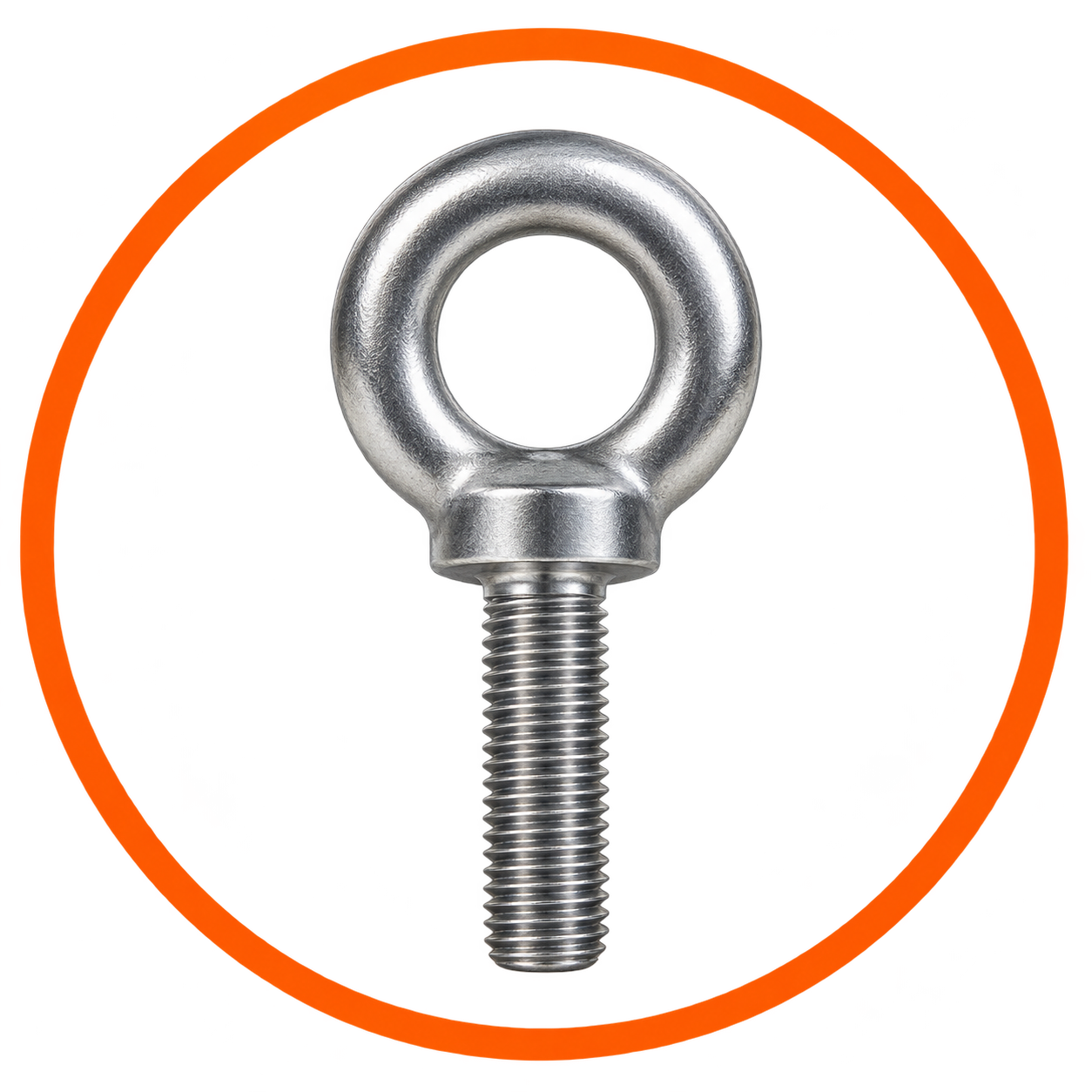
An eye-shaped fastener is not automatically a lifting point. Decorative, general-purpose, anchoring and rated lifting eye bolts can look similar while having very different design requirements and allowable loads.
FIRST IDENTIFY THE APPLICATION
If the component will be used to lift, suspend or handle a load, use only a product specifically rated and documented for that purpose. The applicable product standard, material, thread, working load information and manufacturer instructions must match the lifting arrangement.
LOAD DIRECTION MATTERS
Many lifting eye bolts have strict limits on the direction of loading. Side loading, angular loading or an eye that is not correctly seated can reduce allowable capacity or create bending that the product was not intended to carry. Do not improvise an angular lift from a capacity stated for an axial load.
THREAD ENGAGEMENT AND BASE MATERIAL MATTER
A strong eye bolt installed into an inadequate tapped hole does not create a safe lifting point. The female thread, engagement depth, base material, shoulder seating and surrounding structure must all be capable of transferring the load.
SHOULDER AND SEATING
Where the design requires a shoulder-type lifting eye, the shoulder generally needs to seat correctly against a suitable surface according to the manufacturer instructions. Extra washers or spacers should not be added unless the approved procedure allows them.
INSPECT BEFORE USE
Check for bent components, worn or damaged threads, cracks, corrosion, deformation and illegible markings. A lifting accessory that has been overloaded, modified, welded, heated or otherwise damaged may need to be removed from service according to the applicable inspection rules.
DO NOT SUBSTITUTE BY APPEARANCE
An ordinary eye screw of the same thread diameter may not have the material, geometry, testing or traceability required for lifting. Purchase rated lifting products from a source that can provide the required documentation.
This article is general sourcing information, not a lifting plan. Lifting operations must follow the rated product instructions, applicable regulations and a competent lifting procedure. When there is any uncertainty, the lift should not proceed until a qualified person has approved the equipment and configuration.
Industry Applications
Eye Bolt Selection and Use: Important Checks Before Lifting or Anchoring
Key differences between ordinary eye fasteners and rated lifting eye bolts, plus the checks required before a lifting application.

Was this guide useful?
Help us improve the Knowledge Centre.